


Alzheimer's Disease

A Distinct Challenge Among Tauopathies
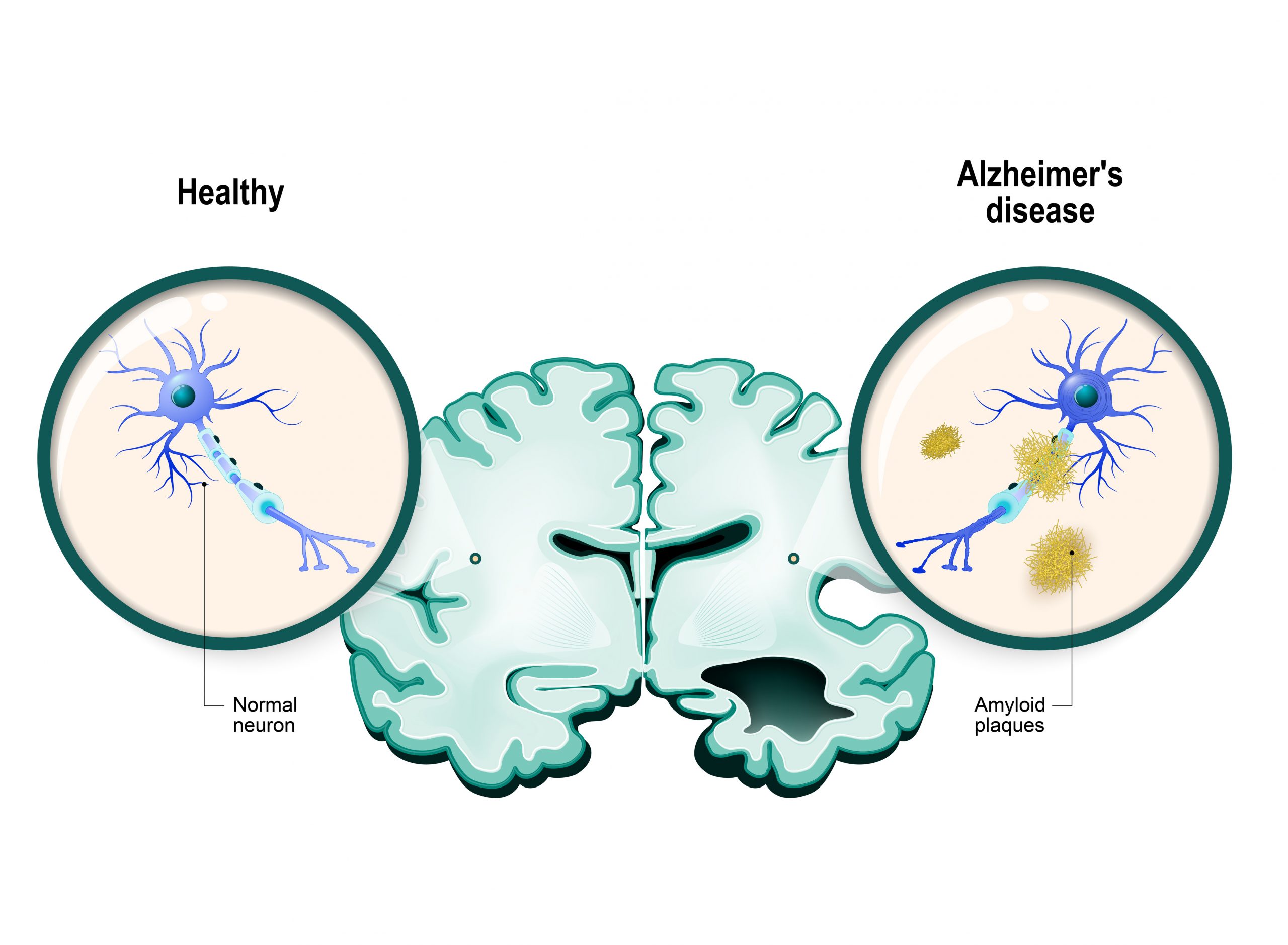
Alzheimer’s disease stands apart from other tauopathies because of its dual, or mixed, pathology. While rare tauopathies are driven primarily by tau protein dysfunction, Alzheimer’s disease is defined by two coexisting hallmarks: intracellular neurofibrillary tangles composed of tau protein and extracellular amyloid-beta plaques. This combination makes Alzheimer’s the most prevalent tauopathy worldwide—and one of the most difficult to treat.
The interplay between these two pathologies complicates therapeutic development. Amyloid-focused strategies have delivered limited clinical benefit, and single-target approaches have repeatedly failed to alter the disease course. Alzheimer’s demands a therapy that can act at the mechanistic root shared with other tauopathies, while remaining effective within its uniquely mixed pathological environment.
The Scale of the Burden
Alzheimer’s disease is a global health and economic emergency that continues to intensify as populations age.
More than 55 million people worldwide live with dementia, with nearly 10 million new cases recorded each year.
Alzheimer’s disease accounts for approximately 60–70% of all dementia cases, making it the leading cause of dementia globally.
The annual global cost of dementia care is projected to exceed $1 trillion, encompassing direct medical expenses and sustained long-term care.
Without effective intervention, the number of people living with dementia is projected to reach 139 million by 2050.
These figures reflect not only a clinical crisis but a mounting strain on families, caregivers, and healthcare systems across both high-income and low- and middle-income countries.
How the Disease Unfolds
Alzheimer’s disease develops over an extended timeline, with biological changes beginning years—often decades—before symptoms emerge. This long preclinical window is a defining feature of the disease and a critical opportunity for early intervention.
- Preclinical stage — Amyloid and tau pathology accumulate silently in the brain, with no measurable cognitive symptoms.
- Mild cognitive impairment (MCI) — Subtle changes in memory and thinking appear, frequently misattributed to normal aging.
- Mild dementia — Memory lapses, difficulty with planning, disorientation, and mood changes begin to disrupt daily life.
- Moderate to severe dementia — Cognitive and functional decline intensifies, culminating in loss of autonomy and dependence on full-time care.
Because irreversible neuronal loss accumulates progressively across these stages, the therapeutic value of early, mechanism-based intervention increases substantially the sooner it begins.
Why Alzheimer’s Remains So Hard to Treat
Despite decades of research and substantial investment, no approved therapy halts the biological progression of Alzheimer’s disease. Several factors explain this persistent gap:
- Mixed pathology — The coexistence of tau tangles and amyloid plaques means that addressing a single pathological driver rarely produces durable clinical benefit.
- Blood-brain barrier limitations — Many candidate compounds fail to reach affected brain tissue in therapeutically relevant concentrations.
- Late diagnosis — Alzheimer’s is frequently identified only after significant neuronal loss has occurred, narrowing the window for meaningful disease modification.
- Symptom-only treatments — Currently available therapies manage cognitive symptoms rather than modifying the underlying disease process.
This convergence of challenges defines a clear, unmet medical need for orally available, brain-penetrant therapies that intervene at the mechanistic root of the disease and early in its course.
Our Approach to Alzheimer’s Disease
Glyx Therapeutics is developing a first-in-class, orally available small molecule designed to intervene at the tau-driven core of Alzheimer’s pathology while operating effectively within the disease’s mixed pathological context.
Our candidate is engineered to address the specific therapeutic hurdles that have limited previous approaches:
- Confirmed blood-brain barrier penetration, ensuring the compound reaches its target in affected brain regions.
- Oral administration, supporting sustainable long-term treatment and improved patient adherence across the extended disease timeline.
- A multi-target mechanism, aligned with the recognition that Alzheimer’s involves multiple interconnected drivers rather than a single pathological event.
By targeting the disease early and at its biological root, our objective is to prioritize the best achievable outcome for patients—ideally arresting progression, and at minimum meaningfully slowing the trajectory of decline.
Why This Matters for Alzheimer’s
The scale of Alzheimer’s disease, combined with the repeated failure of single-mechanism and amyloid-only strategies, underscores the need for differentiated, brain-penetrant therapies. An oral small molecule capable of acting within Alzheimer’s mixed pathology—while remaining relevant to related tauopathies—represents a credible and strategically positioned path toward clinical impact.
For patients, families, and healthcare systems facing an accelerating disease burden, advancing such a therapy is both a scientific priority and a public health imperative.
Partner With Us
We invite clinicians, scientific collaborators, and investors to engage with Glyx Therapeutics as we advance our first-in-class approach to Alzheimer’s disease.
Contact Us to request detailed preclinical data and explore collaboration opportunities.